
TLS Illness Policies
Wondering when you can send your child to school if they have been sick?
If you can answer “No” to all of the following questions, then they are able to come back. If you have any questions, please contact the school office:
Has the student…..
had a fever of 100 degrees or higher in the last 24 hours?
taken fever reducing medication in the last 24 hours?
had diarrhea in the last 24 hours?
had any vomiting in the last 24 hours?
taken any medication to help reduce diarrhea or vomiting in the last 24 hours?
been given a medication by the doctor for any of the following: pink eye, strep throat, or contagious rashes in less than 24 hours?
tested positive for COVID within the last 5 days?
If you suspect your child has any other contagious rashes or infections, they must be evaluated by their provider before coming to school. These include but are not limited to the following:
Hand, Foot & Mouth
Pink Eye
Chickenpox
Shingles
Measles
Any sudden rash associated with cold symptoms (cough, fever, runny nose)
COLD WEATHER CLOTHING GUIDLINES
Here are the guidelines we use to determine what the students should wear outside. Be advised that these are guidelines, many things come into play with weather. But being prepared for the cooler weather with layers is always a good day. These are up to teacher discretion as it may feel different than the temperature says.
Below 55 feels like temp, they need long sleeves
Below 45 feels like, they need a sweatshirt or jacket
Below 35 feels like, Must have a winter jacket and hats & mittens/gloves
IF THERE IS SNOW, they must snow pants, boots, winter coat, mittens/gloves & hat.
Please send your child prepared for the appropriate weather conditions.

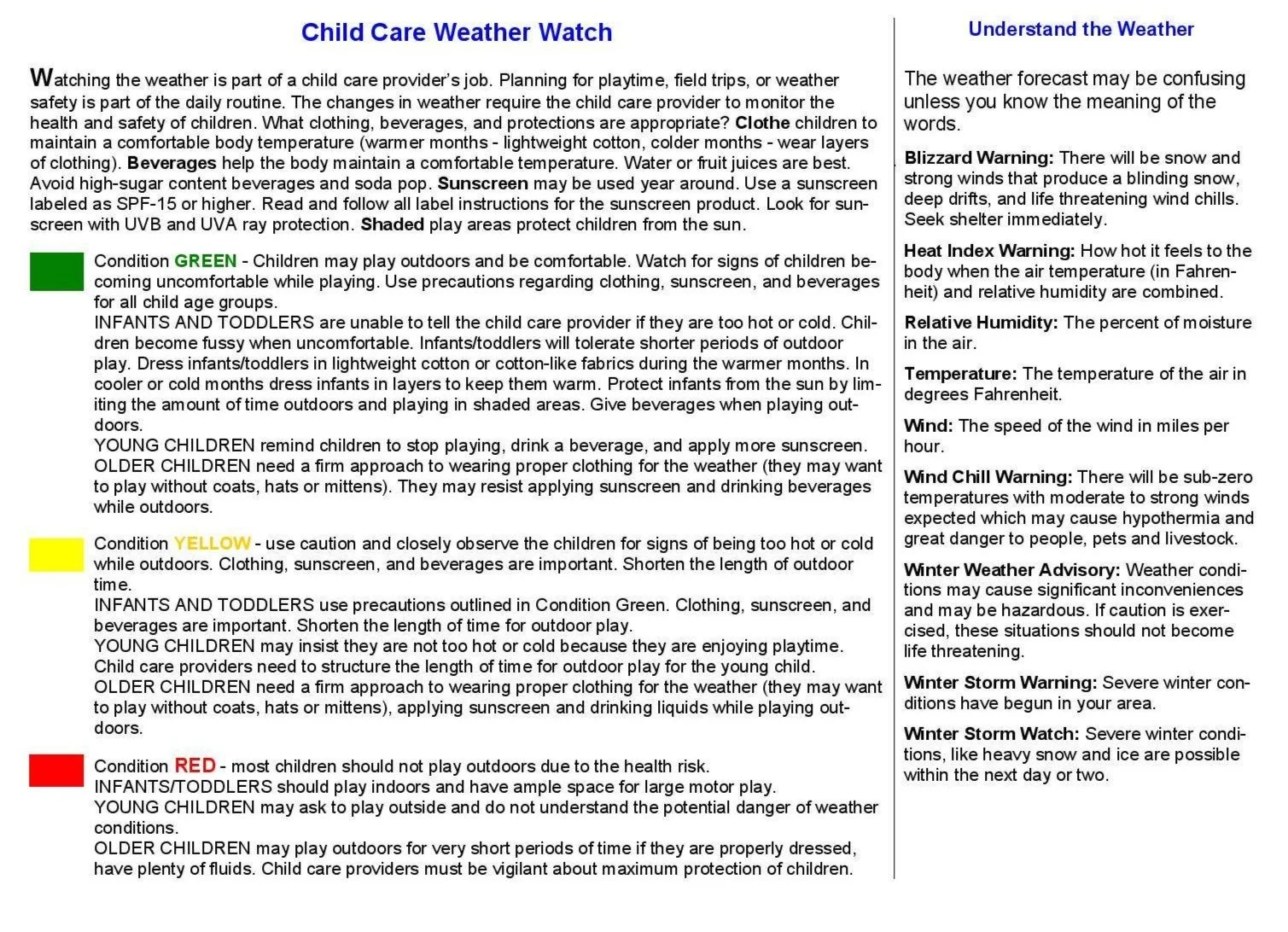

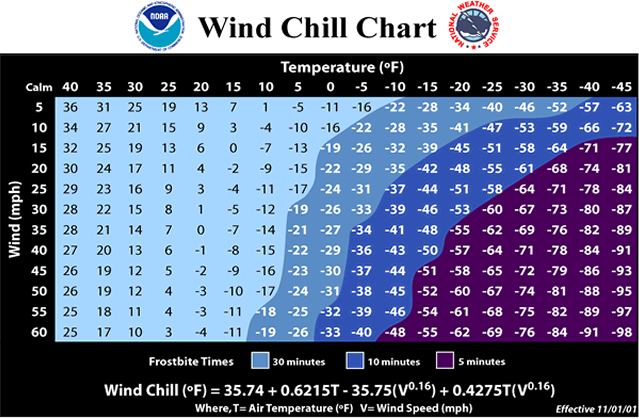
Windchill Protocol at TLS:
-15 and above: students play outside, safety patrol goes out
-16 and below: students don’t go outside and no safety patrol